
Gabriella’s Botanical Library
Sandalwood — one famous name, several fragrant trees
Indian, Australian, Hawaiian and New Caledonian sandalwoods belong to the same botanical family, but they do not smell—or grow—in quite the same way.
The material
What is sandalwood?
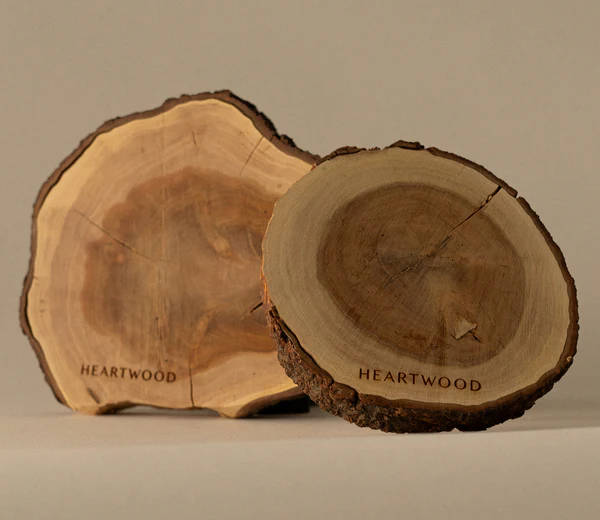
Sandalwood essential oil is distilled from the aromatic heartwood and roots of mature trees in the genus Santalum. Unlike many essential-oil crops that can be harvested after a single season, sandalwood develops slowly. The tree must establish fragrant heartwood before it can yield the deep, persistent oil for which it is prized.
Sandalwoods are also unusual because they are root hemiparasites. Young trees form connections with suitable host plants and draw part of their water and mineral nutrition from them. Successful cultivation therefore depends on managing both the sandalwood and its companion vegetation.
Sandalwood is not one fixed aroma. Species, tree age, heartwood content, growing conditions and distillation all influence whether an oil feels dry and modern, rich and creamy, green, smoky or softly floral.
The Santalum family
The sandalwoods most often found in perfumery
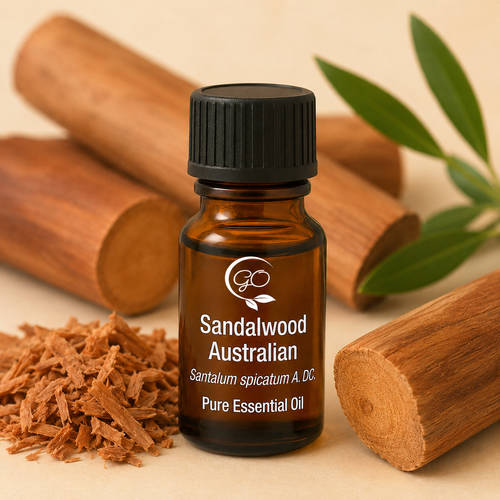
Australian Sandalwood
Santalum spicatum
Native region: Western and southern Australia.
Dry, clean and elegant, with warm wood, faint smoke, leather-like depth and a softly creamy finish. It has a distinctive modern character rather than attempting to imitate Indian sandalwood.
Indian Sandalwood
Santalum album
Historic association: India, particularly Karnataka and the former Mysore region.
Rich, smooth and persistent, with creamy wood, soft sweetness and the rounded character that established the classical sandalwood ideal in incense and fine perfume.
Hawaiian Sandalwood
Santalum paniculatum
Native region: Hawai‘i.
Often described as lighter, greener and slightly floral, bringing a polished woody base without quite the dense butteriness associated with mature S. album.
New Caledonian Sandalwood
Santalum austrocaledonicum
Native region: New Caledonia and Vanuatu.
Typically soft, creamy and sweet-woody, sometimes placed aromatically between the dryness of Australian sandalwood and the fuller richness of Indian sandalwood.
At a glance
A full sandalwood comparison
The ratings below are a practical perfumery guide, not formal sustainability certifications or fixed market prices.
| Species | Native association | Aromatic character | Relative cost | Supply & sustainability | Especially useful for |
|---|---|---|---|---|---|
| Australian S. spicatum | Western Australia | Dry, woody, clean, softly smoky | ££ | ★★★★☆ When traceable and responsibly managed | Candles, soaps, modern woody perfume and everyday blending |
| Indian / Mysore S. album | India; Mysore is a historic regional identity | Creamy, velvety, rich and persistent | £££££ | ★★★☆☆ Source-dependent; plantations and legal traceability matter | Luxury perfume, attars, incense and floral bases |
| Hawaiian S. paniculatum | Hawai‘i | Light, green, gently floral wood | ££££ | ★★★★☆ Best judged by project and provenance | Fine fragrance and refined floral-wood accords |
| New Caledonian S. austrocaledonicum | New Caledonia and Vanuatu | Soft, creamy, sweet and bright | £££ | ★★★★☆ Managed and community-linked sources are available | Natural perfume, amber accords and smooth woody bases |
Stars indicate the potential strength of a well-documented supply model. They should never replace checking the actual producer, harvest method, legal origin and regeneration programme.
Why Gabriella Oils chose Australian sandalwood
A beautiful material with the right purpose
We're working with Australian Sandalwood, also known as Santalum spicatum. What drew us to this source is that it's part of a well-managed and regulated Australian supply chain. But that's not all - it's also connected to projects that provide jobs and economic opportunities for Indigenous people, who have a deep and meaningful connection to sandalwood and the land that goes far beyond the modern perfume industry. This connection is really important to us, and we're proud to be supporting a supply chain that benefits Indigenous communities.
What makes our candles special is the story behind them, but we also need to make sure they actually work well. We use Australian sandalwood in our blends because it gives them a nice, elegant woody smell without being too expensive or overpowering like some other types of sandalwood. When we mix it with wax, it helps bring out the citrus, resin, and floral notes, and smooths out any harsh smells, making the whole fragrance feel complete and nice to smell.
Australian sandalwood has its own unique charm, It's not just a substitute for Mysore sandalwood. It's got a distinct dry, polished, and modern scent that works really well in candles and everyday blends. This difference is actually a good thing, it gives Australian sandalwood its own special character.
Traceability matters more than nationality alone
Not all Australian sandalwood bottles are created equal. Some wild populations have been over-harvested in the past and are struggling to regrow. That's why we prefer sandalwood that comes from well-managed sources, where the story behind the wood is clear. We want to know where it came from, who it's helping, and how it's ensuring the future of these amazing trees.

Beyond the word sustainable
What responsible sandalwood sourcing should mean
Sandalwood has a pretty troubled past. It grows really slowly, and the valuable part of the tree is the heartwood, which makes it super expensive. To make things worse, people need to remove the whole tree, including the roots, to get to the good stuff. This has made some species of sandalwood really vulnerable to people cutting them down illegally or harvesting them in a way that's not good for the environment. So, when you see "sustainable sandalwood" on a label, it should mean that there's a system in place to make sure it's being harvested in a way that's good for the trees and the planet, not just a fancy phrase to make you feel better about buying it.
- Legal and traceable origin: the species, region and supplier are known.
- Regeneration: seedlings, host plants and grazing pressure are actively managed.
- Realistic harvest levels: removal does not outrun the landscape’s ability to replace mature trees.
- Community benefit: Traditional Owners and local communities participate meaningfully in employment, management or ownership.
- Long time horizons: projects plan in decades because sandalwood cannot be treated like an annual crop.
Australian regulation and government involvement can provide an important framework, but they do not make every harvest automatically beyond criticism. Good sourcing combines oversight with transparent science, regeneration and local stewardship.
The perfumer’s wood
Why sandalwood smells so familiar
Australian sandalwood immediately reminds us of men’s perfume: clean wood, warm skin, soft smoke and the polished base of an aftershave or cologne. That recognition makes sense. Sandalwood accords—and modern aroma molecules inspired by sandalwood—have long been used to give masculine and unisex fragrances smoothness, diffusion and staying power.
Just because a perfume smells like it has Australian sandalwood in it, doesn't mean it actually does. A lot of the time, perfumes are made with a mix of natural and synthetic ingredients, including sandalwood, to make them stronger and more consistent. And it's often cheaper to do it this way too. But if you smell natural Australian sandalwood on its own, you can start to pick up on the underlying woody notes that are often hidden in the finished perfume.
Why it works so well in candles
When it comes to candles, you don't necessarily need the most expensive or luxurious ingredients to get the best results. Australian sandalwood, for instance, is a great choice because it adds depth and structure to the scent without overpowering the other notes. It's particularly good at balancing out citrus scents, giving them a smoother edge, and it also helps to ground lavender, preventing it from becoming too overpowering. Additionally, Australian sandalwood supports the richness of resins and gives floral scents a more subtle, less sweet base. This makes it a really versatile ingredient that can enhance a wide range of fragrances in candles.
Citrus
Sweet Orange, Bergamot, Mandarin and Yuzu become warmer and more rounded.
Resins
Frankincense, Myrrh, Benzoin and Tolu Balsam gain a smooth woody frame.
Florals
Rose, Lotus, Jasmine and Ylang Ylang feel softer, deeper and less overtly sweet.
Aromatic herbs
Lavender, Juniper Berry and Basil Linalool gain polish and lasting warmth.
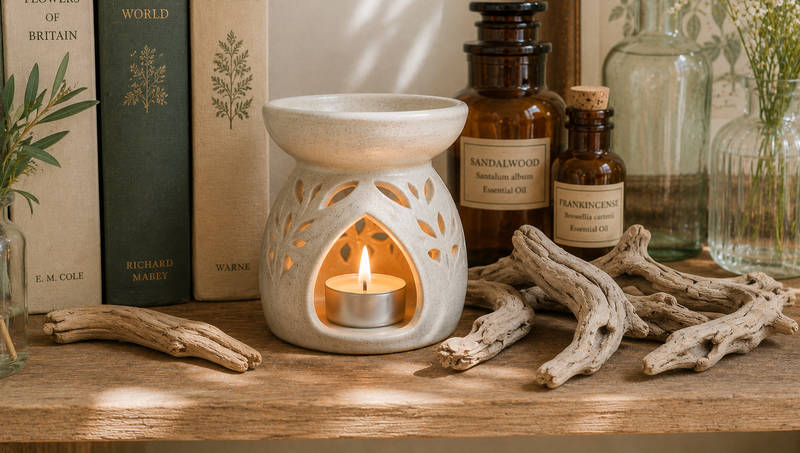
A Gabriella Oils candle accord
Sweet Heartwood
Sweet Orange, Australian Sandalwood, Tolu Balsam, Benzoin and Juniper Berry
The impression
Bright orange peel settles into polished wood, soft balsam and a faintly aromatic finish. Australian sandalwood gives the blend its familiar perfumed base without burying the citrus.
Fragrance ratio
- Sweet Orange
- 39%
- Australian Sandalwood
- 31%
- Tolu Balsam
- 11%
- Benzoin
- 11%
- Juniper Berry
- 8%
Based on our candle blend proportions: the percentages show the ratio within the aromatic concentrate, rounded for readability. Finished candle loading and safety limits must be calculated separately.
Frequently asked questions
Choosing a sandalwood
Is Australian sandalwood real sandalwood?
Yes. Santalum spicatum is a true member of the sandalwood genus. It is not Amyris, Cedarwood or a fragrance oil sold under a convenient name.
Is Mysore sandalwood a separate species?
Mysore describes a famous regional and historical identity associated with Indian sandalwood, Santalum album. The name does not create a separate botanical species, and it should be supported by credible provenance rather than used loosely for any S. album oil.
Which smells better: Australian or Indian?
Indian sandalwood is usually richer, creamier and more classically luxurious. Australian sandalwood is drier, cleaner and more contemporary. The better choice depends on the formula, budget and desired effect.
Would Mysore improve a candle?
It would change it, but not necessarily improve it enough to justify the cost. In a fine perfume, Mysore’s depth and persistence can be central. In a candle blend, Australian sandalwood may provide all the wood, warmth and structure required.
Does sandalwood improve with age?
Well-stored sandalwood oil is often valued for the way it becomes smoother and more integrated over time, although storage conditions, authenticity and oxidation still matter.
Explore further
Shop and related reading
Discover Australian Sandalwood or continue through the Botanical Library.
Gabriella’s Botanical Library
The right material is the one that suits the work
Rarity and reputation matter less than authenticity, responsible sourcing and how beautifully a botanical performs in the finished blend.
Browse the Botanical Library